
The Number That Tells the Real Story
Jan 23, 2026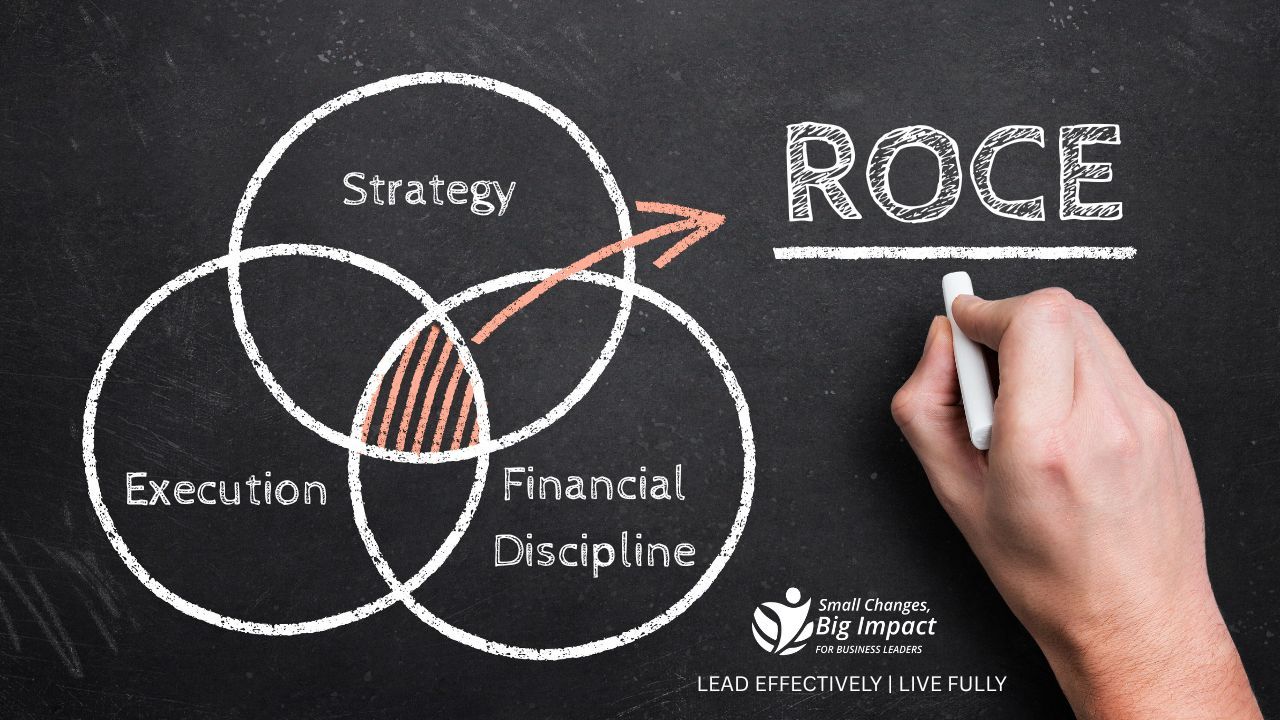
Why ROCE Is the Bedrock of Your Business
Many business leaders track revenue, profit, and cash flow religiously—yet still feel uncertain about whether their business is truly creating value. That’s where Return on Capital Employed (ROCE) comes in.
This Fortnightly Focus draws on Small Change 5D.2 – Understand why ROCE is critical for the business from An Entrepreneur’s Guide.
ROCE is not just another financial ratio. It’s one of the clearest indicators of whether your business is delivering real wealth for everyone who has a stake in it.
Why ROCE Matters
At its core, ROCE measures how effectively your business uses the capital invested in it to generate profit. It brings together two critical perspectives:
- Profit and Loss performance
- Balance Sheet discipline
ROCE is calculated as:
Earnings Before Interest and Tax (EBIT) ÷ Net Operating Assets
- EBIT reflects how well you manage profitability.
- Net Operating Assets (total assets minus current liabilities) reflect how well you manage the capital tied up in the business.
This combination is powerful. ROCE shows not just whether you are profitable, but how efficiently you are creating value from the resources at your disposal.
Why Leaders Should Pay Attention
Wealth creation is usually a fundamental objective for business owners—but it also matters deeply to shareholders, lenders, suppliers, and employees. ROCE provides a shared language for these stakeholders.
Because ROCE is measured before financing costs, it allows meaningful comparison with the cost of capital. This is why banks and investors pay close attention to it. A higher ROCE signals that your business is generating stronger returns for every dollar of capital employed.
In simple terms:
A rising ROCE usually means a healthier, more resilient business.
Small Changes That Deliver Impact
- Ask for visibility. Ask your accountant to calculate and explain your ROCE—not just annually, but as part of regular performance reviews.
- Improve profit without adding capital. Look for ways to lift operating profit without increasing assets or working capital.
- Invest deliberately. Only pursue new projects that are expected to earn more than your cost of capital.
- Free up trapped capital. Remove or redesign activities that fail to cover the cost of the capital they consume.
- Use ROCE alongside other ratios. Combine it with measures like return on equity and return on assets for a fuller picture.
Impact Perspective
ROCE sits at the intersection of strategy, execution, and financial discipline. Leaders who understand it tend to:
- Make better capital allocation decisions
- Avoid growth that looks impressive but destroys value
- Build credibility with banks and investors
- Strengthen long-term business sustainability
When ROCE is strong, your business is not just busy—it is productive in the right way.
Reflection Questions for Leaders
- Do I know my current ROCE—and how it has changed over time?
- Which parts of the business are tying up capital without generating sufficient return?
- Are our growth initiatives improving ROCE or diluting it?
- How confident am I that our capital is being used as effectively as possible?
- What is one decision I could make this quarter to improve ROCE, not just profit?
Remember: ROCE is the bedrock of your business. When leaders understand and actively manage it, they create clarity, confidence, and sustainable value—one small change at a time.
For more small changes with impact buy the book: An Entrepreneur’s Guide: 7 Focus Areas to Align and Transform the Business